Wi-Fi for RTLS: location from the plant network
Using plant Wi-Fi access points as RTLS anchors is a different job from using the same LAN only as a pipe for another radio. This page covers fingerprinting, RSSI, and Wi-Fi RTT builds, and when location-from-the-network is honest enough for the floor.
What Wi-Fi is
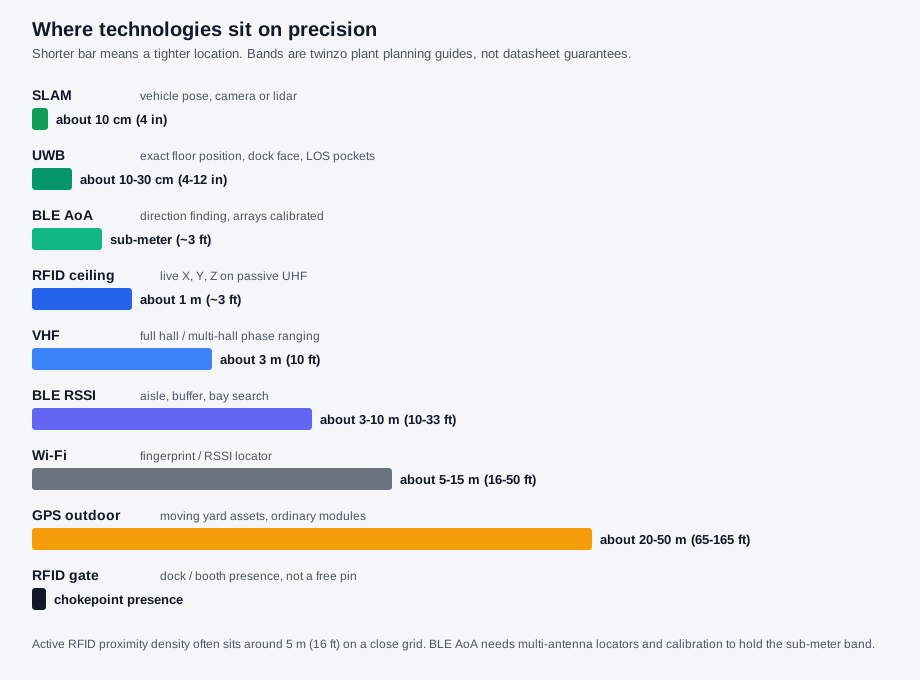
Wi-Fi is the plant wireless LAN. For RTLS, the same access points (or a denser overlay of them) become known anchors. Tags, phones, tablets, or vehicle clients associate or probe. The stack turns signal strength, radio fingerprints, or round-trip time into a location on the hall map. Classic RSSI or fingerprint builds in busy metal halls often land in a coarse hall-scale band, about 5–15 m (16–50 ft). Open offices can do better. Wi-Fi RTT (Fine Timing Measurement) can tighten results toward a few metres (about 10 ft), and research deployments sometimes report sub-metre (~3 ft) error when clients, APs, and calibration all support it. Treat those tighter numbers as a hardware-and-survey checklist, not a default plant outcome.
Wi-Fi is one technology family among peers for indoor asset tracking and indoor positioning. It is not the same as using Wi-Fi only to carry a result from another locator to the server. Match the job to the technology first. The decision order sits under start with the decision, not the technology. The wider menu is in RTLS technologies out there.
How Wi-Fi gets a location
1. RSSI or proximity to access points - The client or tag is heard by one or more APs. Loudness and which AP heard it set a zone presence or a rough coordinate. That reuses an existing AP plan quickly. It weakens when metal, bodies, and inventory change the radio weather every hour. Why loudness is not a clean meter stick is explained in RSSI is signal strength, not distance.
2. Fingerprinting - Survey teams walk the hall and record how the Wi-Fi landscape looks at known spots. Live samples are matched to that radio map. Accuracy depends on survey density and how often the AP channel plan or inventory layout changes. A stale fingerprint map still returns a confident wrong place.
3. Wi-Fi RTT (Fine Timing Measurement) - Supported clients and APs measure round-trip time instead of loudness alone. That can tighten the location when the hardware pair is certified for it and multipath is managed. Many industrial tablets and older APs still lack a clean RTT path, so brochure timing claims need a device checklist before they enter the BOM.
4. Pipe versus locator - The same SSID can carry application traffic and, separately, feed a location engine. Buying more Wi-Fi coverage for tablets does not automatically buy honest aisle coordinates. Ask which measurement creates the location.
Strengths
Reuse of plant network spend. When AP density is already high for operations, location can ride hardware IT already owns, which reduces the need for a second locator radio family when coarse accuracy is enough. Phones and tablets the plant already buys can participate without a special tag radio if the location stack supports those clients. Channels, controllers, and security fit the operating model network teams already run. That can shorten the conversation for coarse zone presence and soft indoor search when a few metres to tens of metres (about 10–50 ft) answers the shift question. The twin used for internal logistics optimization can still ingest that stream as one modality among peers.
Weaknesses
Metal racking, moving inventory, and 2.4 / 5 GHz congestion make Wi-Fi fingerprints drift. Accuracy is often too coarse for exact floor position or tight dock-face proof. Fingerprint surveys cost labour and go stale after AP moves or layout change. RTT needs matching client and AP support that many brownfield halls lack. Battery tags that only do Wi-Fi burn through cells quickly when the radio stays awake at a high update rate. Put survey refresh, AP density upgrades, and client compatibility on the payback sheet in what to include when calculating RTLS ROI.
When Wi-Fi fits
1. Name the accuracy floor - Coarse zone presence or soft aisle search where being wrong by several metres (tens of feet) still works. If the decision needs about 1–3 m (3–10 ft) medium-precision location or exact floor position, Wi-Fi is usually the wrong primary locator for that job.
2. Check the AP and client reality - Count usable APs, whether fingerprint or RTT is in scope, and whether the devices you will track actually support the measurement. Existing Wi-Fi for data traffic is not a coverage map for location.
3. Keep pipe and locator straight, then land one map - Use Wi-Fi as locator only when that is the deliberate choice. Use it as pipe when another radio creates the location. Then put the stream on one digital twin for logistics and production monitoring. Peer technology pages sit under RTLS technologies out there. Definitions start at what is RTLS. Product capabilities are on the features overview.
Pick Wi-Fi location when reuse of the plant LAN is the point and coarse-to-medium accuracy is enough. Get in touch if you want to walk that choice against your AP plan and facility model.