
Blog

Industrial metaverse - from vision to reality

We will be discussing what makes a metaverse exponentially more valuable than anything that has existed in the past.

  • Patrik Pasko

  • September 19, 2024

twinzo logistics analytics on a phone
Industrial metaverse - from vision to reality

Why the term “metaverse”?

You may be wondering why the term “metaverse” is being used to describe a virtual environment. The reason is simple: it's a term that has been used by science fiction writers and other people interested in VR, AR, and MR for decades. Metaverse was coined by Neal Stephenson in his 1992 novel Snow Crash as an alternative name for what he called a “consensual hallucination”—a collective virtual space that all users could access from anywhere in the world. Later on, James Cameron's 1997 film Titanic popularized this word even more when Rose DeWitt Bukater uses it to refer to her beloved ship: "You're going to build me a palace on top of the Titanic!" she tells Jack Dawson (Leonardo DiCaprio), but he replies "The Titanic sank." To which she replies: "The Metaphor ain't sunk yet!"

In 2008's WALL-E movie we see our first glimpse of what this kind of experience might look like with EVE (EXTREME VERSION) hologram appearing before WALL-E (ROBOTIC VERSION). Finally three years later Jaron Lanier released his book You Are Not A Gadget which proposed new ways for humans interacting with technology through our senses and emotions rather than just through thought or ideas alone; thus introducing us once again into many possibilities! This has led us right here today where there are many different kinds like augmented reality apps such as Pokémon GO!, mixed or expanding reality games like No Mans Sky, Roblox & Magic Leap One creator edition goggles etc..

How does the industrial metaverse work?

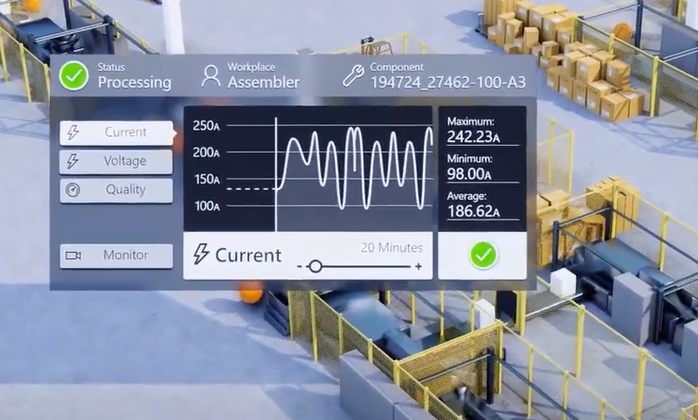
The Industrial Metaverse, as a concept, connects the physical and digital worlds. It does this by using augmented reality, 3D models, machine learning, artificial intelligence and virtual reality. The Industrial Metaverse allows you to see your factory through an augmented reality headset or glasses that shows you a 3D model of what's happening in real time inside your factory. By combining all these technologies together into one system it enables you to do things like monitor equipment performance remotely and make changes based on data collected from sensors throughout your facility.

The Industrial Metaverse is useful because it allows factories to become completely connected with the world around them through advanced devices such as artificially intelligent robots that can perform tasks autonomously while being monitored by human operators who sit somewhere far away from where they're working; this type of setup is known as tele-operations (or telepresence). In addition to connecting people with their machines via video conferencing software running on computers connected over vast distances using wireless networks like Wi-Fi or cellular signals sent through satellites orbiting Earth's atmosphere up above us right now.

The broader benefits of the industrial metaverse.

The industrial metaverse has the potential to deliver many benefits. These include:

•  Improved efficiency - with a shared, real-time operating model, companies can operate more efficiently by making better decisions and sharing information across the enterprise. This could be used in any industry where there is a need for collaboration among different groups. For example, if you have five contractors working on your next building project, it would be easier for them all to work together if they had access to one central operating platform instead of each having their own data in silos (or even worse—not using any technology at all).

•  Improved safety - making it easy for everyone on site at an industrial facility (from management down through line workers) to know what they need to do and when they need to do it will reduce risk of accidents and increase productivity overall. For example, if someone needs help moving equipment around because they’re stuck behind something else that won't move out of their way (like another vehicle), this could cause delays or even injuries due to improper planning ahead of time which would not happen if everyone involved knew exactly what was happening at any given moment during production time frames."

What’s next for the industrial metaverse?

But what’s next for the industrial metaverse? We expect to see more companies adopting this approach over time. As we move toward a “smart factory” and “Factory-as-a-Service” (FaaS), the industrial metaverse will play an increasingly important role in connecting people and processes within industries.

As with any new technology, there are challenges to overcome when deploying it at scale. For example, there are issues around security, privacy and data sovereignty—both at an enterprise level as well as at an individual level when employees use wearables or mobile devices in their work environment. There are also concerns around how much access employees should have to information on their colleagues or bosses; how this information can be used by employers; or whether it's appropriate for them to know who is working where at all times during their shift?

The industrial metaverse is a new way of seeing and working with the manufacturing plant floor.

The industrial metaverse is a new way of seeing and working with the manufacturing plant floor. It's a virtual environment that combines real-time data, graphics and animation to create a virtual representation of your plant floor. The goal is to give you better insight into your production process by giving you better access to information. This can be used in any industry where there are physical processes taking place on a factory floor. The benefits of this technology include improved communication between teams, more efficient use of resources and reduced time spent searching for information.

Conclusion

It’s time to think outside our usual boxes and start imagining what a future powered by virtual reality could look like. The possibilities are endless and could make all the difference to how we live our lives in the future. I hope this article has given you some food for thought — make sure you subscribe so that you know when I publish my next post!

You might also be interested in:

What is industrial metaverse?

What is industrial metaverse?

There are many complicated explanations of what is the metaverse and that it is the future that will come in 10 years. Truth is, that metaverse is already here, at least in parts. Because #metaverse is just interconnected, real-time digital twins, exactly like we do in @twinzo. ‍ So building blocks of metaverse are available and already affordable, which is proved by companies in CEE that already operate such digital twins.

Digital Twin sources

Digital Twin sources

The first step towards a digital twin is the creation of a digital model of the object or environment. This step can be difficult, but there are multiple options for creating an accurate representation. ‍ One way towards creating a digital twin is to accurately represent the digital model of the physical object or environment.

Landscape mode is not supported, please rotate your device.

By clicking “Accept”, you agree to the storing of cookies on your device to enhance site navigation, analyze site usage, and assist in our marketing efforts. View our Privacy Policy for more information.